Harold's first arrival at St Bernadine's Hospice
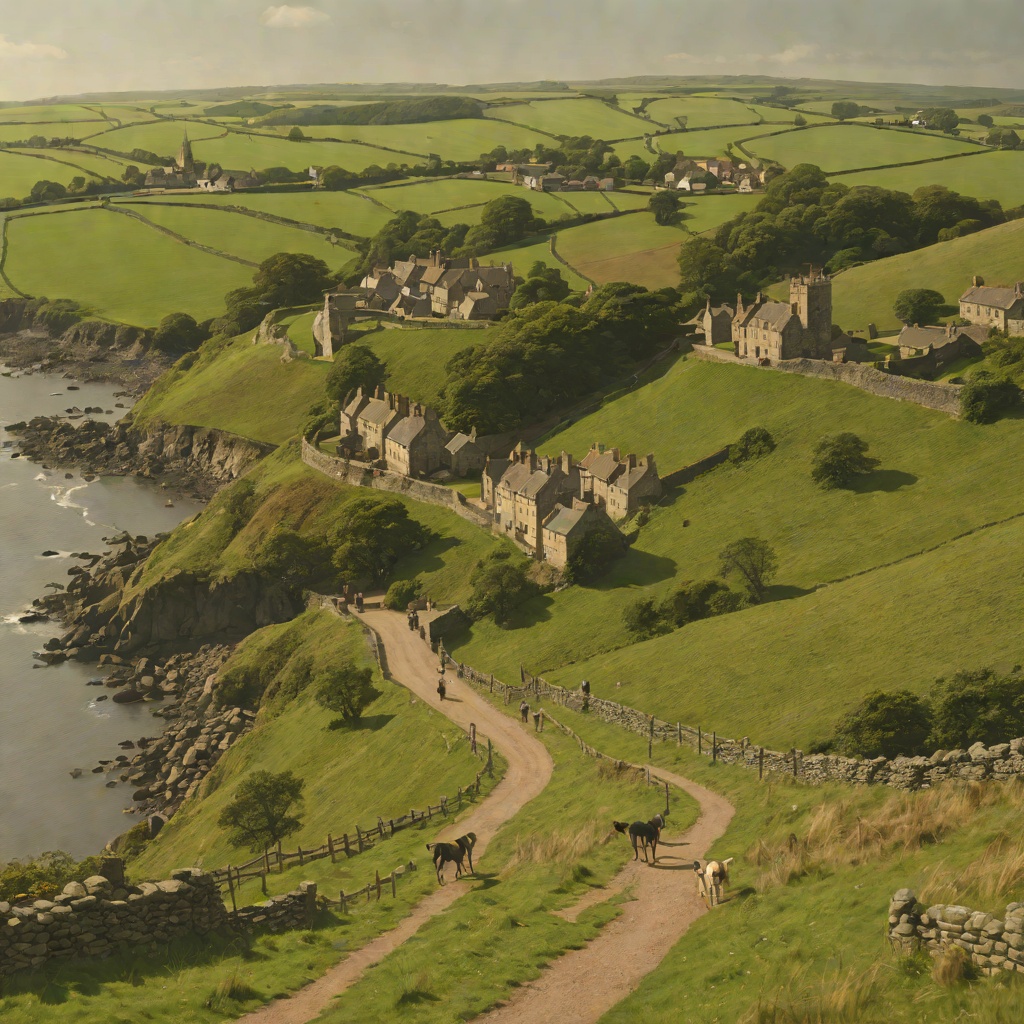
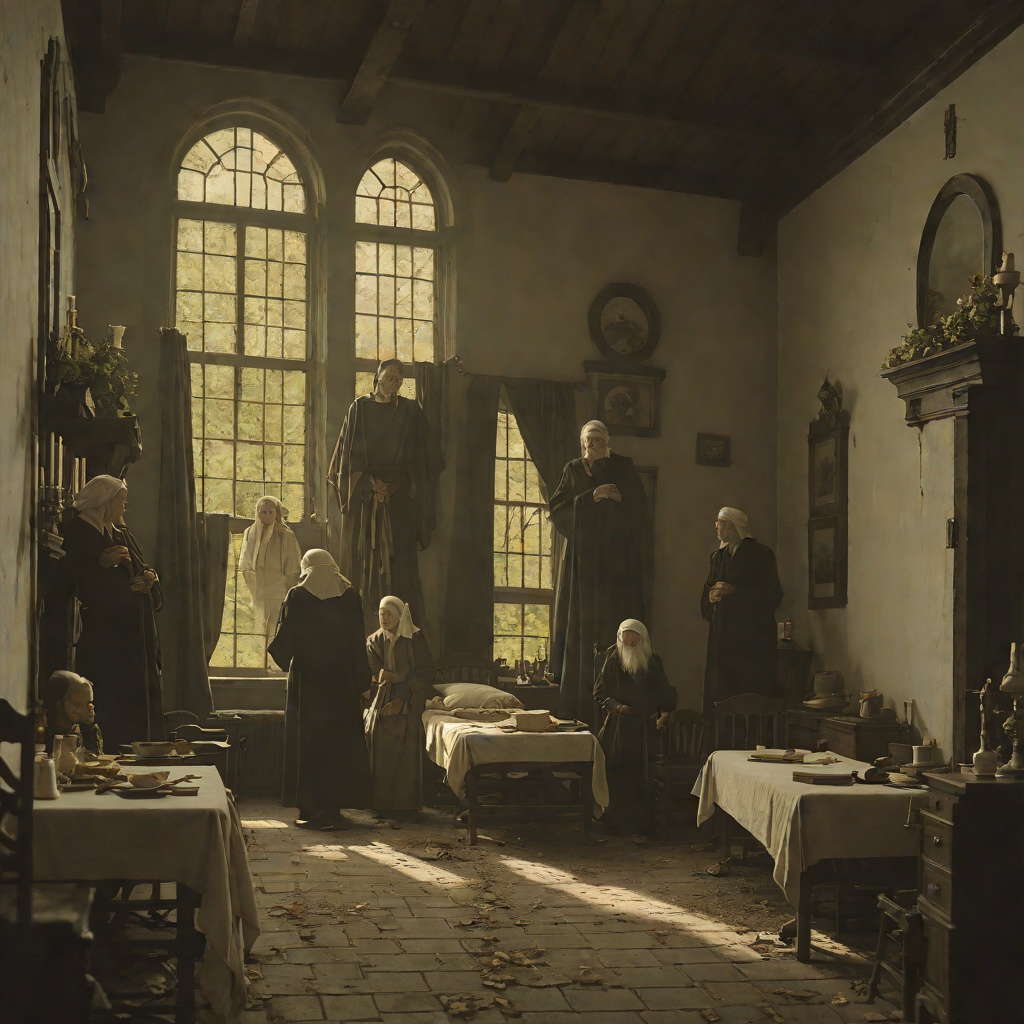
The Unlikely Pilgrimage of Harold FryAfter eighty-seven days of walking, Harold Fry arrived at the gates of St Bernadine's Hospice. The journey that had begun as a simple errand to post a letter to Queenie Hennessy had stretched into a pilgrimage of six hundred and twenty-seven miles, including mistakes and diversions. The building before him was modern and unassuming, flanked by trembling trees, with an old-fashioned street lamp close to the main entrance and a sign pointing to a car park. Several bodies sat in deck chairs on the lawn, like clothes set out to dry, and a seagull wheeled and barked overhead. At three thirty on a Tuesday afternoon Harold had smelt salt in the wind, and an hour later he reached the brow of a hill and saw a town lying before him, fringed by the endless gap that was the sea. He approached the pinkish-grey town walls but no one stopped, or looked twice, or offered him food.
The Decision and the Journey
The arrival was the culmination of a decision made in a single moment, with no deliberation and no reasoning. Standing in a phone box at the other end of England from Queenie, Harold had pictured her dozing while he stood in a phone box, with things in between that he didn't know and could only imagine: roads, fields, rivers, woods, moors, peaks and valleys, and so many people. He would meet and pass them all. The decision came in the same moment as the idea, and he was laughing at the simplicity of it. He had told the voice on the other end of the line that Harold Fry was on his way, that all she had to do was wait, because he was going to save her. He would keep walking and she must keep living. When he phoned Maureen, she had challenged him, pointing out that he was sixty-five and only ever walked to get to the car, and that he had left his mobile phone. He had replied that it wasn't enough to post a letter, that he needed to do this. She had told him to head off to Berwick if that was what he wanted, and that she'd like to see him get past Dartmoor.
The Walk and Its Meaning
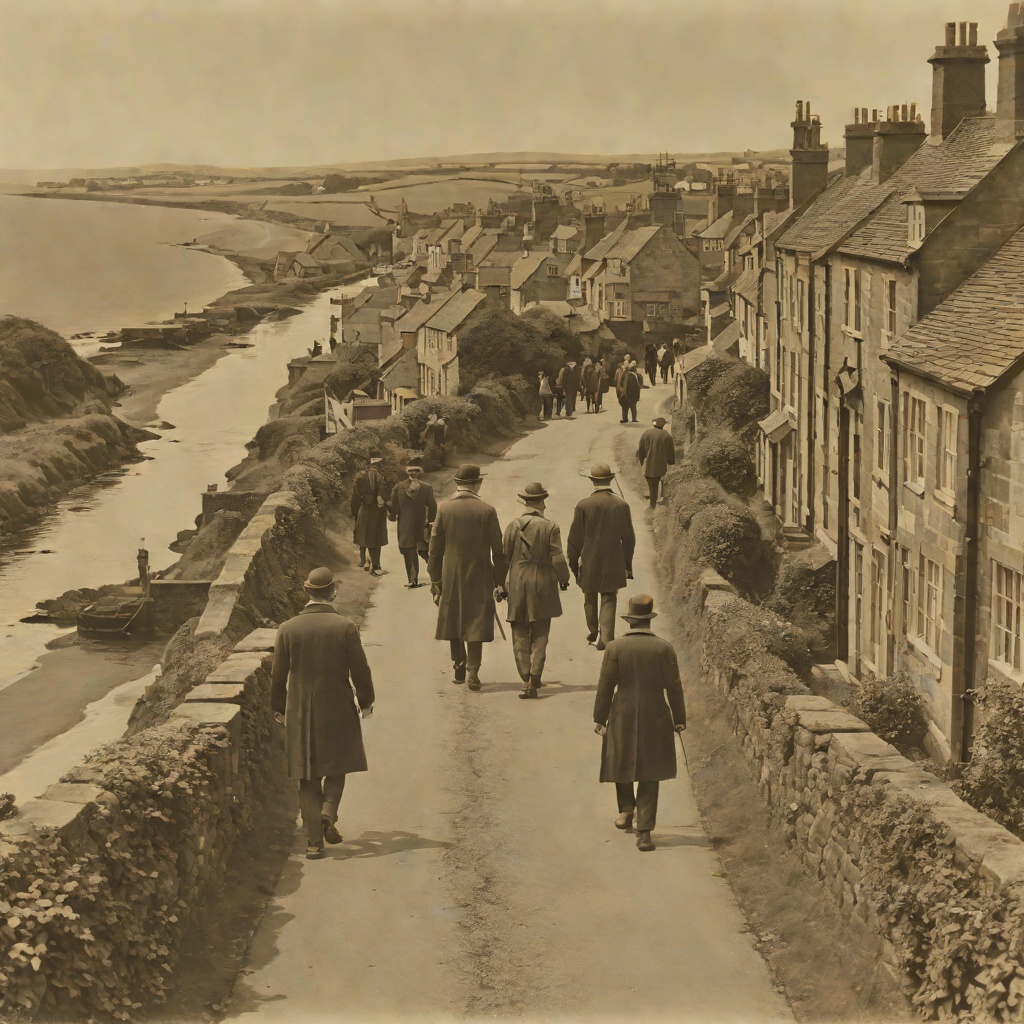
Harold had walked through wind and weather, and beneath sun-bleached skies, taking the A-roads, B-roads, lanes and tracks, following the compass as it quivered northwards. He went by day or by night, as the mood took him, mile after mile after mile. If the blisters were bad, he bound them with duct tape. He slept when the need for it came, and then he returned to his feet and walked again. He went under the stars, and the tender light of the moon, when it hung like an eyelash and the tree trunks shone like bones. It seemed to Harold that he had been waiting all his life to walk. He no longer knew how far he had come, but only that he was going forward. The pale Cotswold stone became the red brick of Warwickshire, and the land flattened into middle England. He reached his hand to his mouth to brush away a fly, and felt a beard growing in thick tufts. Queenie would live. He knew it. He had learned that it was the smallness of people that filled him with wonder and tenderness, and the loneliness of that too. The world was made up of people putting one foot in front of the other, and a life might appear ordinary simply because the person living it had done so for a long time. He could no longer pass a stranger without acknowledging the truth that everyone was the same, and also unique, and that this was the dilemma of being human.
The Moment of Doubt
Harold walked the soft curve of the tarmac drive and lifted his finger to the buzzer. He wished the moment would hold itself, like an image cut out of time, his dark finger against the white button, the sun on his shoulders, the seagull laughing. His journey was over. But then his mind fled back over the miles that had brought him to this place. He saw roads, hills, houses, fences, shopping centres, streetlights and post boxes, and there was nothing extraordinary about any of them. They were simply things he had passed, that anyone might have passed. The thought filled him with sudden anguish, and he was afraid at the point where he had least expected to feel anything other than triumph. How did he ever believe that those very commonplace things would add up to something more? His finger remained, suspended over the buzzer but not pressing it. What had it all been about? He thought of the people who had helped him. He thought of the unwanted, the unloved, and he numbered himself among them. And then he considered what must follow from here. He would give his presents to Queenie, and thank her, but then what? He would return to the old life he had almost forgotten, where people staked trinkets between themselves and the outside world, where he lay in one bedroom, not sleeping, and Maureen lay in another.
The Turning Away
Harold replaced his rucksack on his shoulder and turned from the hospice. As he left the gates, the figures lying in deck chairs did not look up. No one was expecting him and so no one appeared to notice his arrival or his departure. The most extraordinary moment of Harold's life had come and gone without trace. In a small café, Harold asked a waitress for a glass of water, and use of the bathroom, apologizing that he had no money. He waited patiently as the waitress's eye took in his tangled hair, his ripped jacket and tie, and travelled down the length of his mud-soaked trousers, to land on his feet that were more blue duct tape than yachting shoe. Her mouth frowned and she glanced over her shoulder towards an older woman in a grey jacket who was talking to customers. The waitress said he'd better be quick then, and ushered him towards a door, without touching any part of him. In the mirror, Harold met a face he only dimly knew. The skin hung in dark folds, as if there was too much of it for the bone behind. He appeared to have several cuts to the forehead and cheekbone. His hair and beard were wilder than he expected, and from his eyebrows and nostrils shot stray long hairs like wires. He was a joke old man. A misfit. He looked nothing like the man who had set off with a letter, nothing like the man who had posed for photographs and worn a pilgrim T-shirt.
The Weight of the Past
The doubt that seized Harold at the hospice gates was not new. Throughout the walk, he had carried the weight of a past he had spent twenty years seeking to avoid. In walking, he had unleashed that past, and it chattered and played through his head with a wild energy that was its own. He no longer saw distance in terms of miles; he measured it with his remembering. He had recalled the afternoon twenty years ago when it had all come to an end, seeing his hand reaching for the wooden door, feeling the warmth of the sun on his shoulders, smelling the mouldering, heated-up air, hearing the stillness of a silence that was not what it should be. He had shouted 'No' and batted out at the rain, and then his calf had exploded as if the skin-side of the muscle had been sliced open. The ground tipped at an angle, and seemed to swell, and his knees buckled and his body lurched to the ground. The memory that most feared him was of his son David, who had hanged himself in the garden shed, tied to one of the hooks he used for garden tools. Harold had discovered him, and lifted him down, but there was no life. He was too late. The confession he would later write to the garage girl revealed the full story: David was depressed, and addicted to mixing alcohol with pills, and couldn't get a job. Harold wished with all his heart that David had spoken to him. The coroner said it must have taken a long time to tie the noose, and Harold wished they hadn't told him about that. His wife Maureen took it terribly, wouldn't leave the house, put up net curtains because she didn't want the neighbours prying, and began talking to David as if he were still with her. She kept his room exactly as it was the day he died. Harold had started drinking to keep himself steady before the coroner's report, keeping the bottles in paper bags under his desk, and when he was really out of it one night, he dismantled the garden shed, and then broke into the brewery and did something terrible. Queenie knew it had to be him and she took the blame. She was fired on the spot and then she disappeared. Harold let her go. He let her take the blame. But he gave up drinking. Maureen and he fought for a long time, and then gradually they stopped talking. She moved out of their bedroom. She stopped loving him.
The Significance of the Turning Point
The arrival at St Bernadine's Hospice is the moment where the pilgrimage's meaning is tested and found wanting. Harold had kept to the roads because, despite the odd fast car, he felt safer there. It didn't matter that he had no mobile phone, or that he had not planned his route, or brought a road map. He had a different map, and that was the one in his mind, made up of all the people and places he had passed. He stuck to his yachting shoes because, despite the wear and tear, they were his. He saw that when a person becomes estranged from the things they know, and is a passer-by, strange things take on a new significance. And knowing this, it seemed important to allow himself to be true to the instincts that made him Harold, as opposed to anyone else. Yet at the gates, all those commonplace things did not add up to anything more. The young man Mick had called his walk a pilgrimage for the twenty-first century, saying it was awesome and that his was the kind of story people want to hear. But Harold's own doubt at the threshold reveals the gap between the story others saw and the story he lived. The moment of turning away is not a failure but a necessary collapse, the point where the pilgrim must shed even the meaning of the pilgrimage itself before he can truly arrive. The old hymn that had echoed through his journey, about being a pilgrim through wind and weather, with no discouragement making him relent from his first avowed intent, finds its hardest test not in the road but at the door. Harold's finger suspended over the buzzer, and then withdrawn, is the truest measure of what the walk had been: not a triumph to be completed, but a transformation that could only be recognized in its own undoing.